Business problem
The TPG brand team discovered that customers perceived the brand as outdated and stale, prompting a full refresh of the brand identity. They came to us with a bold new direction – our role was to bring that to life across digital channels.
My role
I led the content strategy and user testing for the project, which included aligning and experimenting with the new brand voice, translating brand guidelines into a practical tone of voice for the website, conducting a content and accessibility audit, and refining microcopy through iteration.
As part of the refresh, the team also took the opportunity to redesign the homepage, ensuring it reflected the updated brand and improved the overall user experience.
Discovery and iteration
I kicked off the project by exploring key areas that would shape our content strategy:
- Stakeholder needs – understanding business goals and internal priorities
- Competitor analysis – identifying gaps and opportunities in the market
- DVF framework – to help prioritise ideas based on desirability, viability, and feasibility
- User testing – to uncover pain points with the existing homepage experience
This foundation helped us create a strategy that was both user-focused and aligned with business objectives.


Experimentation
While user testing guided many of our decisions, we also leveraged live A/B testing to validate and optimise content in real time.
Testing microcopy
We experimented with different heading variations for a product offer and found that copy focused on savings or promotional offers significantly boosted both engagement and conversion.


Outcomes
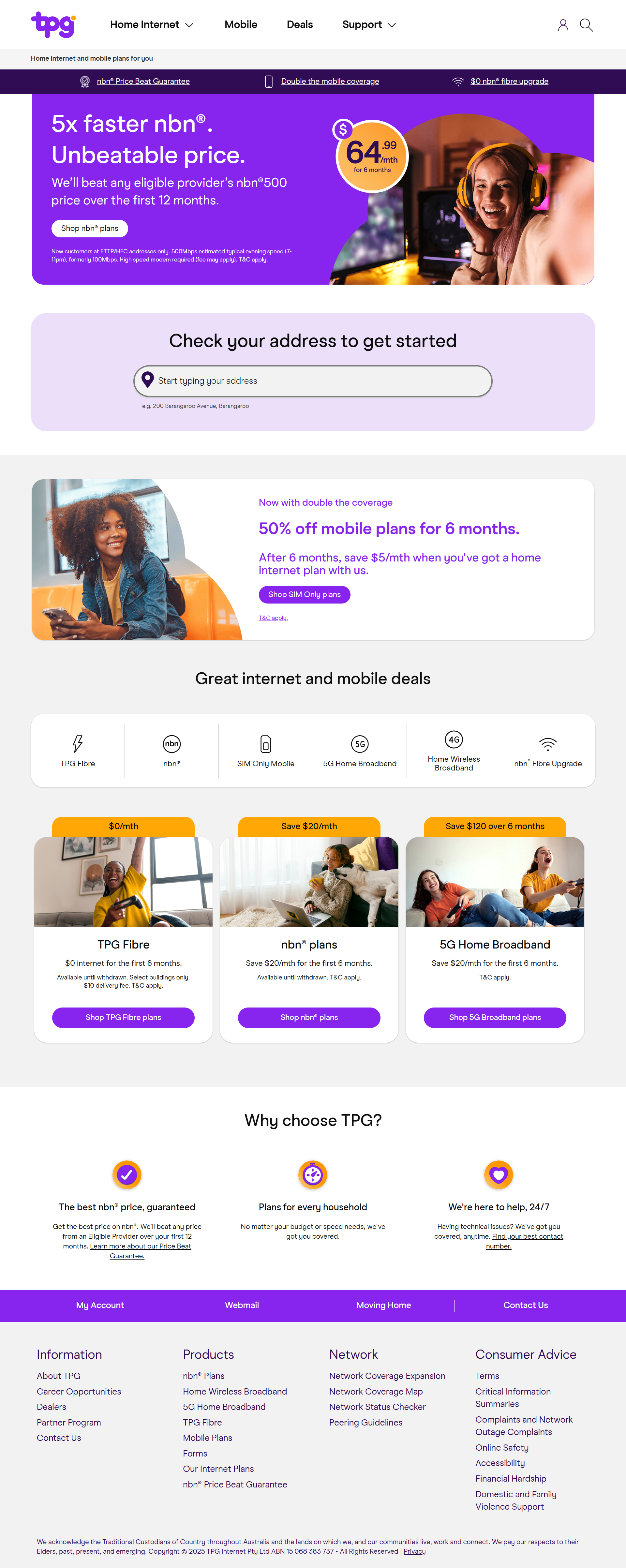
Just take a look for yourself:
- Cleaner, friendlier copy
- Improved visual hierarchy
- Enhanced functionality, including quick links to popular pages, clear value propositions, and tailored CTAs for existing customers

Compare this to before…yikes:

Engagement rates on the homepage improved 22-34% in the first month.

The accessibility of the homepage also improved:

Post-launch, I conducted user testing to measure shifts in brand sentiment and provided reporting to the leadership team.
For existing customers, the refreshed brand and website consistently improved perceptions of TPG – boosting likeability, digital engagement, and alignment with the brand’s core values: simplicity, trust, and affordability.
For non-customers, the results were more mixed. While the new site improved impressions of TPG’s value and increased brand affinity, it didn’t significantly shift perceptions around whether TPG could meet their needs. In some cases, confidence in the brand actually declined.
Breaking through with the non-customer segment remains a challenge – but that’s what makes the work interesting!


Leave a Reply